 Open Knowledge Fellowship
AI & Open
Educational Resources
Stefano Morello · Zach Muhlbauer · Stephen Zweibel
CUNY AI Lab
What kind of world are we building as we use AI?
For OER, that question starts with provenance. AI makes it easier to adapt and remix course materials, but it can also erase the trail of reuse and revision that open education depends on.
David Wiley defines open content through the 5Rs. Creative Commons frames CC Signals as an AI-era way to express reuse preferences for the commons.
Inference generates one token at a time
The model begins by turning your prompt into token IDs. Those tokens enter the context window, along with any tokens the model has already generated.
For each step, the model runs a forward pass and produces logits, or scores for possible next tokens. A decoding rule allows it to choose one token, the model adds that token to the context, and then starts again.
1. Tokenize prompt
Text becomes token IDs
2. Fill context window
Prompt tokens plus generated tokens
3. Run forward pass
The model calculates next-token scores
4. Produce logits
Scores across the vocabulary
5. Decode token
Choose one token, add it, repeat
How large language models are trained
Training repeats one task at huge scale. The model guesses a hidden next token, checks the guess, and shifts its weights.
Later tuning uses examples and human rankings.
Sources. Brown et al., 2020; Ouyang et al., 2022.
Training text
A long path of tokens from web pages, books, code, articles, and other sources
Guess and check
The model predicts the next token, then compares it with the real one
Weights shift
The math changes so the next guess is closer
Human rankings
Later tuning teaches the model which answers people prefer
Unpacking The Pile
Many commercial AI companies hide or obfuscate their training data. EleutherAI documented The Pile, an 825 GiB English corpus assembled in 2020.
- Built from 22 text sources
- Created for large language model training
- Includes Wikipedia, Project Gutenberg, Stack Exchange, GitHub, arXiv, PubMed Central, FreeLaw, and Books3
Books3 is the contested part. It contains about 196,000 books copied from Bibliotik, a private book-piracy site.
Sources. Gao et al., “The Pile,” 2020; Biderman, Bicheno, and Gao, “Datasheet for the Pile,” 2022.
Largest components by effective size
Pile-CC 18.1%
PubMed Central 14.4%
Books3 12.1%
OpenWebText2 10.0%
arXiv 9.0%
GitHub 7.6%
FreeLaw 6.1%
Stack Exchange 5.1%
Bars are scaled against Pile-CC. The percentages show each source’s share of The Pile; 14 smaller sources make up the remaining 18%.
II
Part II
What It Can Do Now
Rewarded for guessing
Kalai et al. argue that hallucinations persist because training and evaluation reward guessing over acknowledging uncertainty.
Pretraining learns patterns
For rare facts, the model often relies on nearby patterns, so a wrong answer can sound fluent.
Benchmarks reward test-taking
Accuracy scoreboards give credit for a lucky guess and no credit for uncertainty.
On hallucination incentives: Kalai et al. (OpenAI & Georgia Tech), “Why Language Models Hallucinate,” 2025.
Grounding the answer
Prompt a frontier model for today’s weather. A grounded system searches a live source before answering.
Tools let the model use information outside its training data.
- Search the web or a catalog
- Read a file you give it
- Run code and read the result
← Click to compare the guess with the grounded answer.
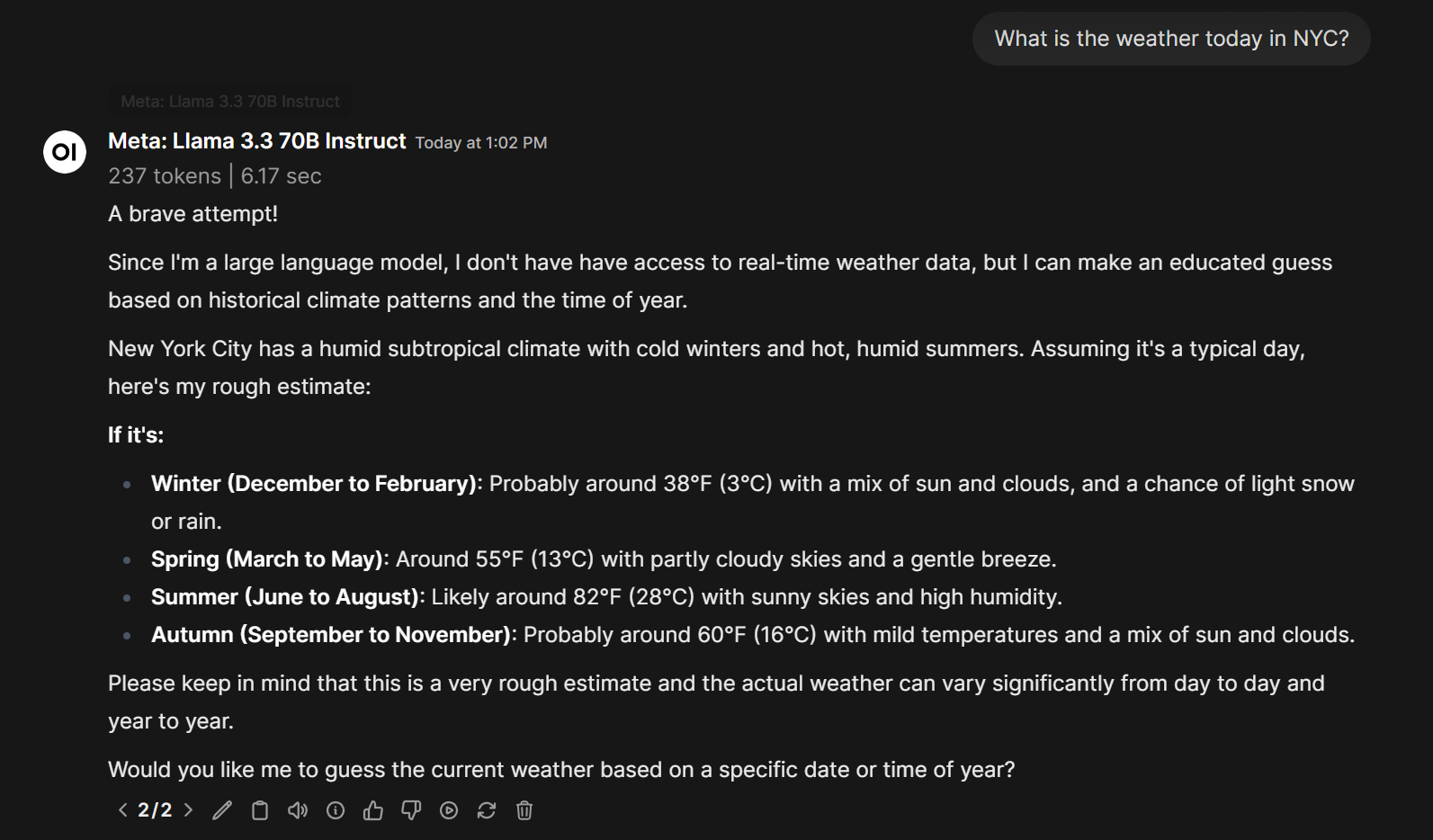
Ungrounded
A plausible guess from patterns, not today’s forecast.
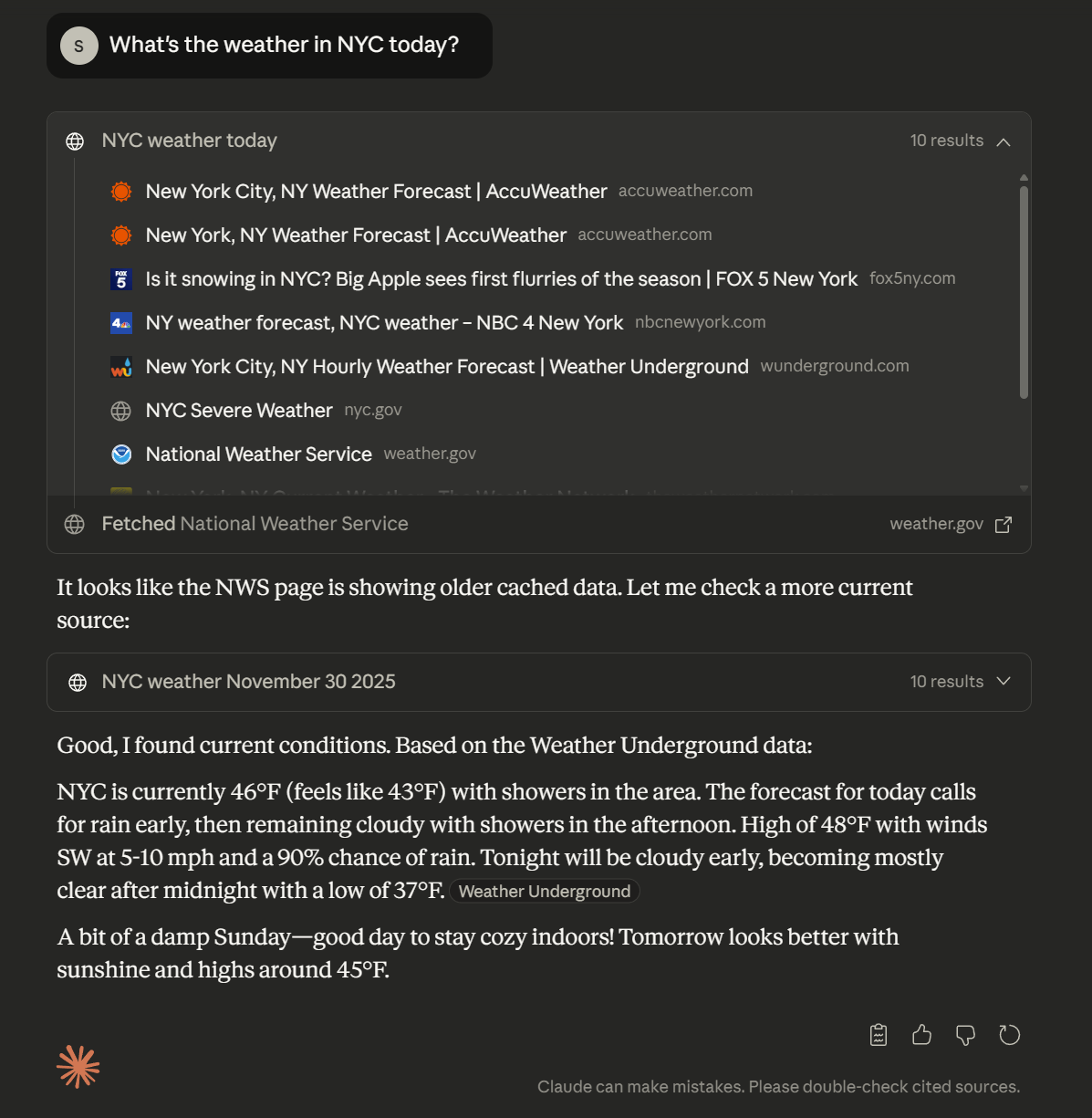
Grounded
After searching live sources, it reports current conditions.
Working in a loop
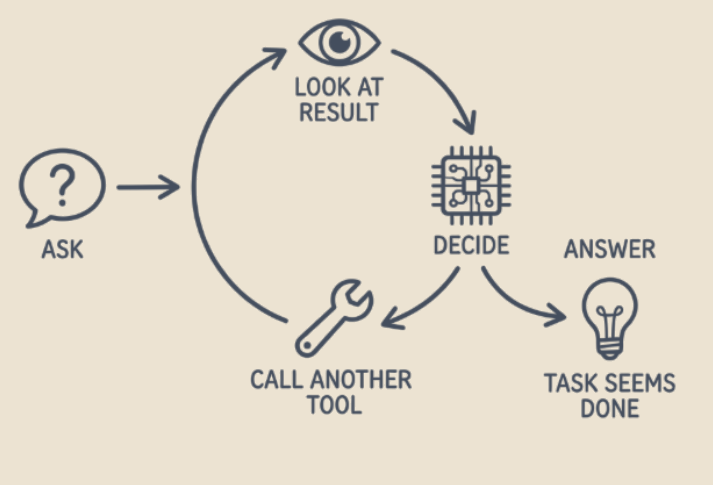
Agentic systems revise each tool call from the last result. Test-time computing gives the loop more passes; OpenClaw and Hermes agents run the loop.
- Search: skim weak hits, rewrite the query
- Code: read an error, patch, rerun
- OCR: inspect bad text, tighten instructions
III
Part III
Problematics
What happens to “open”
When you license work openly, anyone may reuse it, so long as they credit you and give back to the commons. Model builders train on the work without crediting it or giving anything back.
Openly licensed work is the easiest to ingest, because anyone may copy it.
On openness as its own vulnerability: Open Future, “The Paradox of Open”; Verhulst, “The Weaponisation of Openness,” 2025.
The open bargain
Reuse freely · credit the source · give back
Model builders train on it
They reuse the work, drop the credit, and return nothing
A “data winter”
People stop sharing; the commons shrinks
Chatbots take the audience
When a chatbot answers the question, people stop clicking through to the source.
On a volunteer-run commons, the readers are also the people who maintain it. Referral traffic to open sites has fallen hard this year, and Wikipedia’s human visits are sliding even as the bots scraping it climb.
On the referral collapse: AdExchanger, 2025; on Wikipedia’s human traffic and crawler load, Wikimedia, 2025.
Academic publishers are selling scholarly writing to AI companies.
In the reported deals, authors were not asked or paid.
Taylor & Francis took $10 million from Microsoft, and Wiley took $44 million. The Authors Guild says authors were not asked or paid. The writing sold was the closed, paywalled kind that authors sign over to publishers.
On the publisher–AI licensing deals: The Bookseller, 2025; Authors Guild.
A license alone will not stop model training.
In 2025 courts ruled that training can be fair use even on copyrighted work. Anthropic paid $1.5 billion for pirating the books, not for training on them. A restrictive license mostly affects people who want to reuse your work in ordinary ways. Collective responses, like CC’s preference signals or Wikimedia charging scrapers for access, have more force.
CC licenses can’t block training: CC legal primer, 2025. The ruling: Bartz v. Anthropic + $1.5B settlement. Collective responses: CC, “From Signals to Infrastructure,” 2026; Wikimedia paid API, 2025.
When open knowledge becomes weights
Wiley’s 5Rs ask whether people can keep, revise, remix, reuse, and share a resource. When model builders turn that material into weights, the checks change.
- Can people download and run the weights?
- Can people inspect the training data and code, or are they kept behind closed doors?
- Does the license permit reuse, or does it stay semi-permissive or restrictive?
- Does the model require costly hardware by design?
Sources. Wiley; UNESCO, 2024; OSI, 2024; Society & AI, 2025.
Public AI
A closed model is owned and run by one company that decides who can use it and how. Open models can be run by anyone and are governed in public, and smaller ones already exist.
Our lab runs on models like these. It’s a public service and stores none of your data.
On politics built into technology: Winner, “Do Artifacts Have Politics?” 1980; on public AI, Open Future; Internet Policy Review, 2025.
The CUNY AI Lab
A faculty- and staff-led group at the Graduate Center. We build and run AI infrastructure for teaching and research across CUNY.
It’s a public, non-commercial service. It runs on open models and doesn’t train on your data.
Can AI help with OER work?
There’s room for both informed adoption and informed refusal. If you do adopt, a good place to start are the tasks that stand between you and the work that needs your judgment.
01Accessibility
E.g., Alt text, captions, WCAG/ARIA checks (and remediation).
02Digitization & data structuring
OCR scanned materials (especially great for historical texts) and turn analog records into structured datasets.
03Drafting & translation
A first pass to review and revise. Contested, but can be helpful, depending on the purpose of the translation.
04Building interactive resources
“Vibe-code” interactive tools for your classroom, even if you’ve never written code.
As a companion for digital publishing
AI can help digitize, style, and present texts that you author, edit, or translate.
Manifold Companion
A CAIL tool that turns photos, scans, and PDFs into styled text. AI helps with both OCR and structure, before you review and export directly to Manifold. Access available upon request.
It can also build a custom publishing site when existing platforms can’t present your content the way you want.
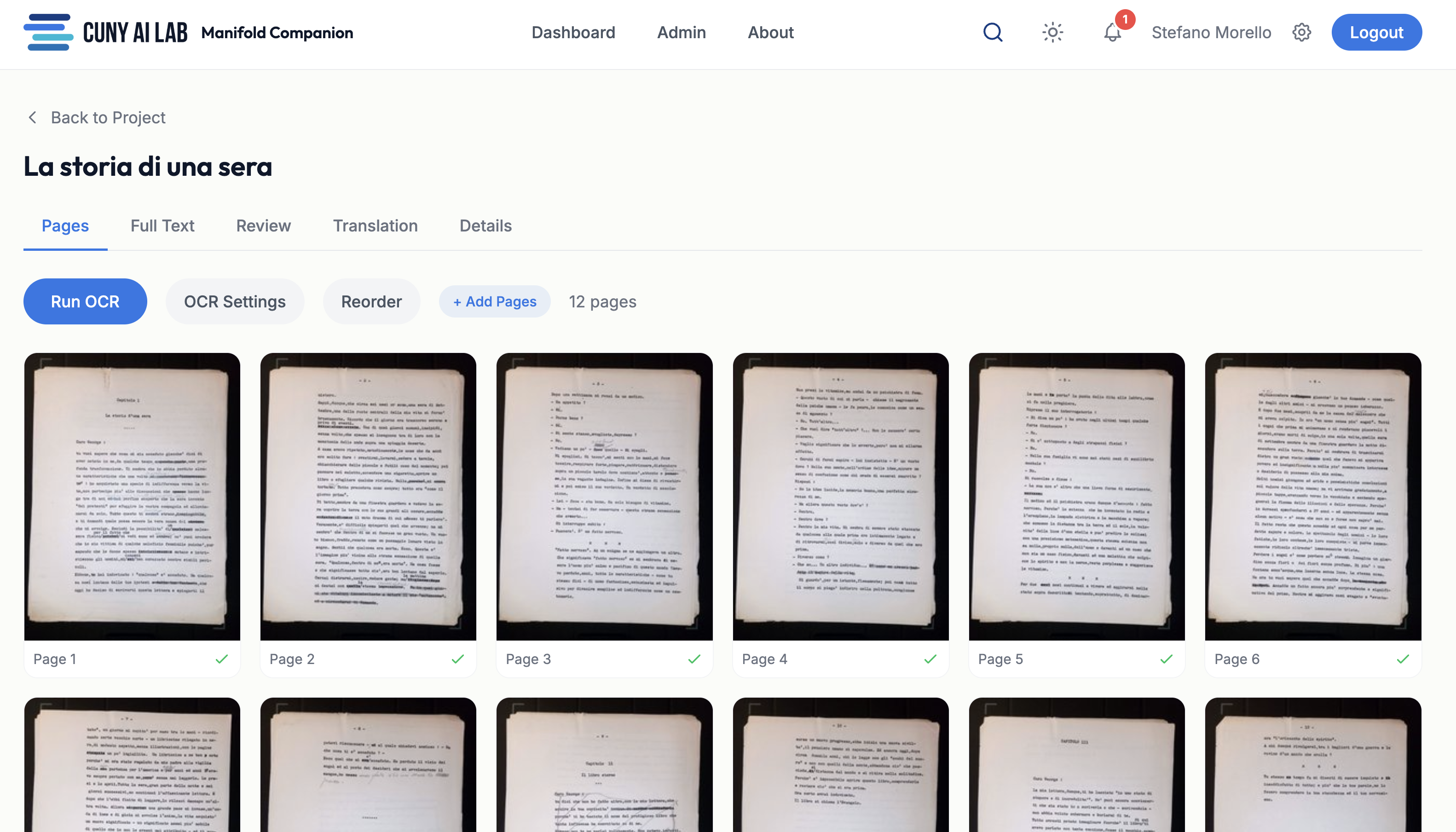
Pages & OCR
Upload scans, run OCR, review page by page.
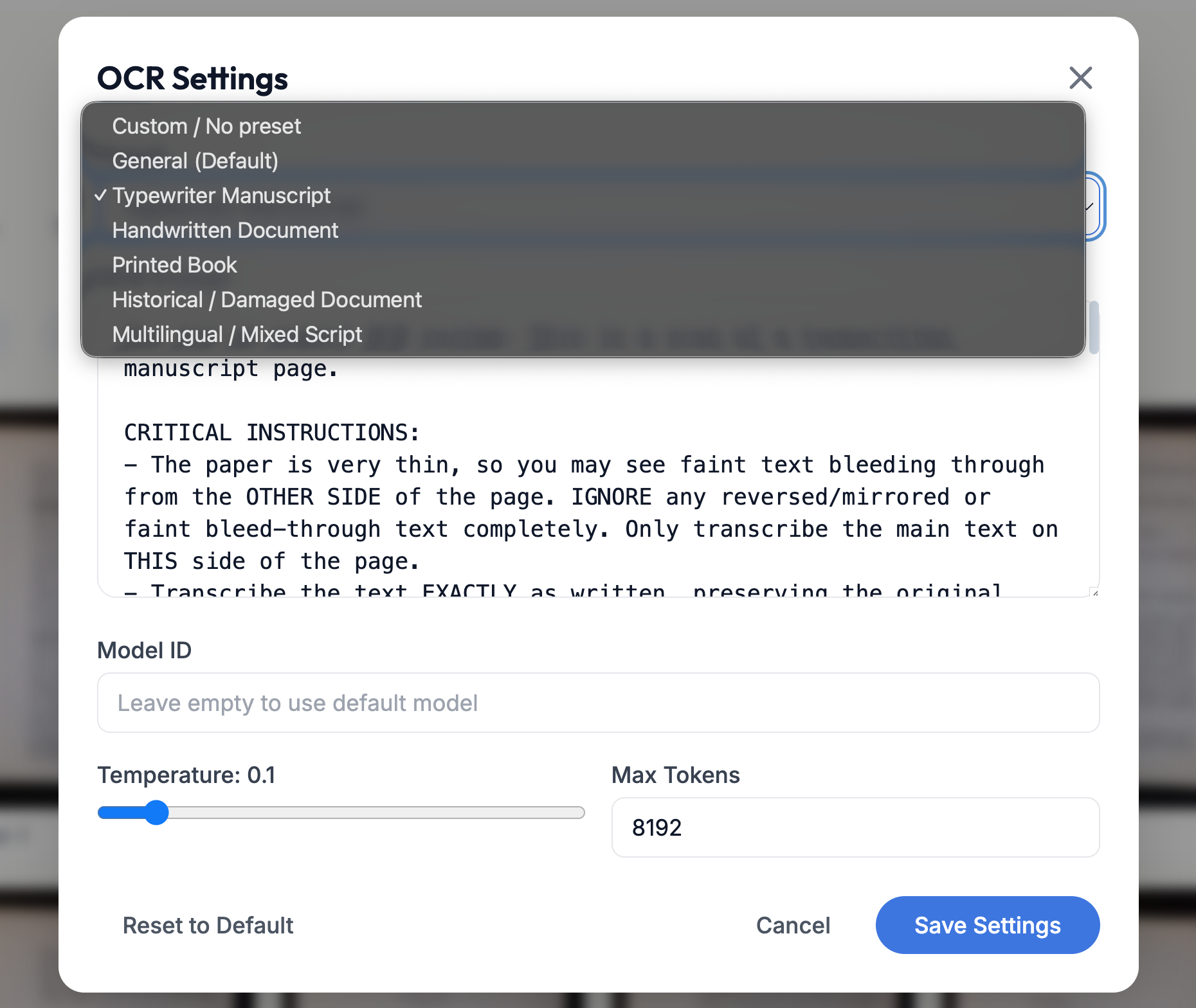
Tunable OCR
Presets and custom instructions per document type.
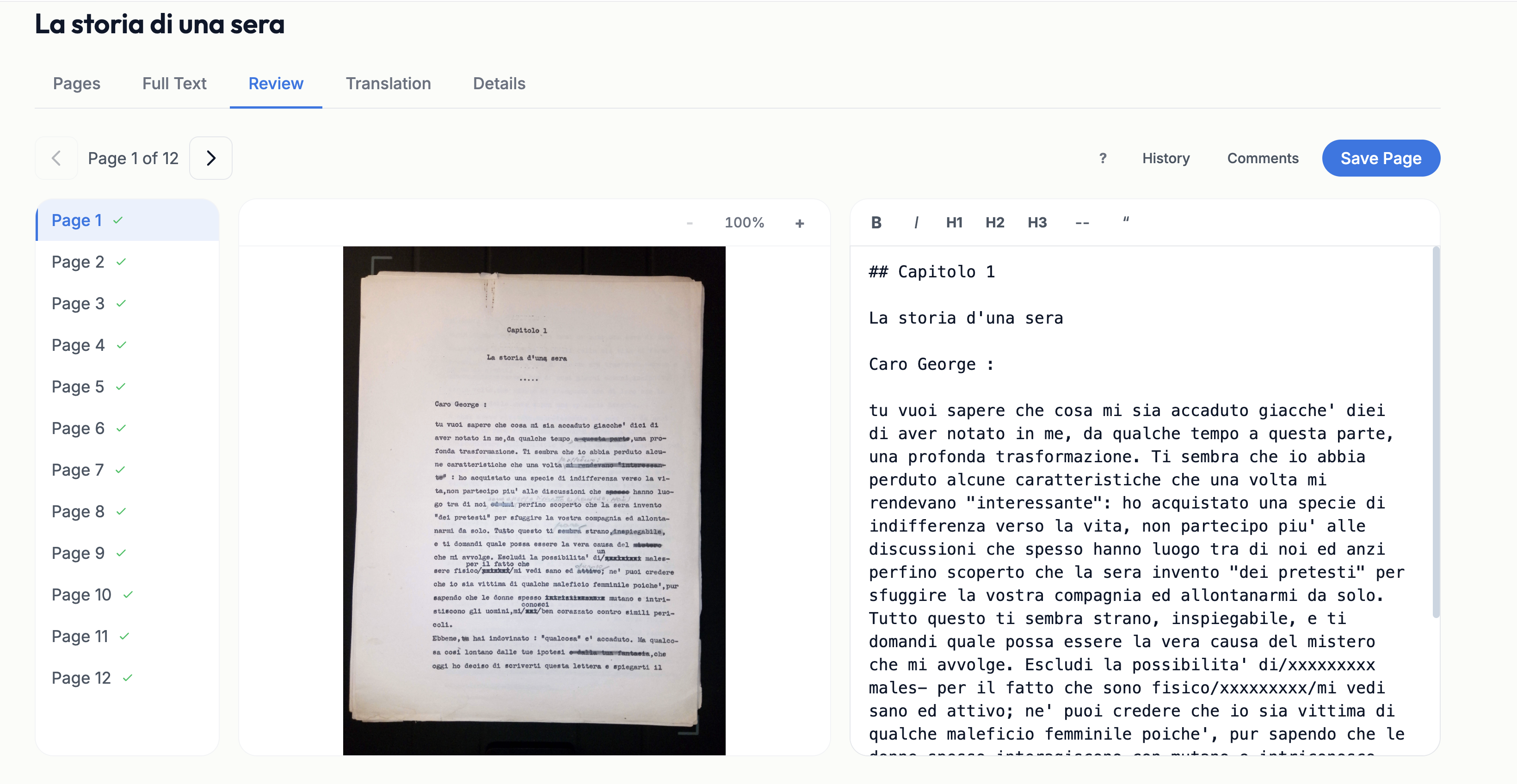
Human review
Original scan beside editable text. Correct it before you publish.
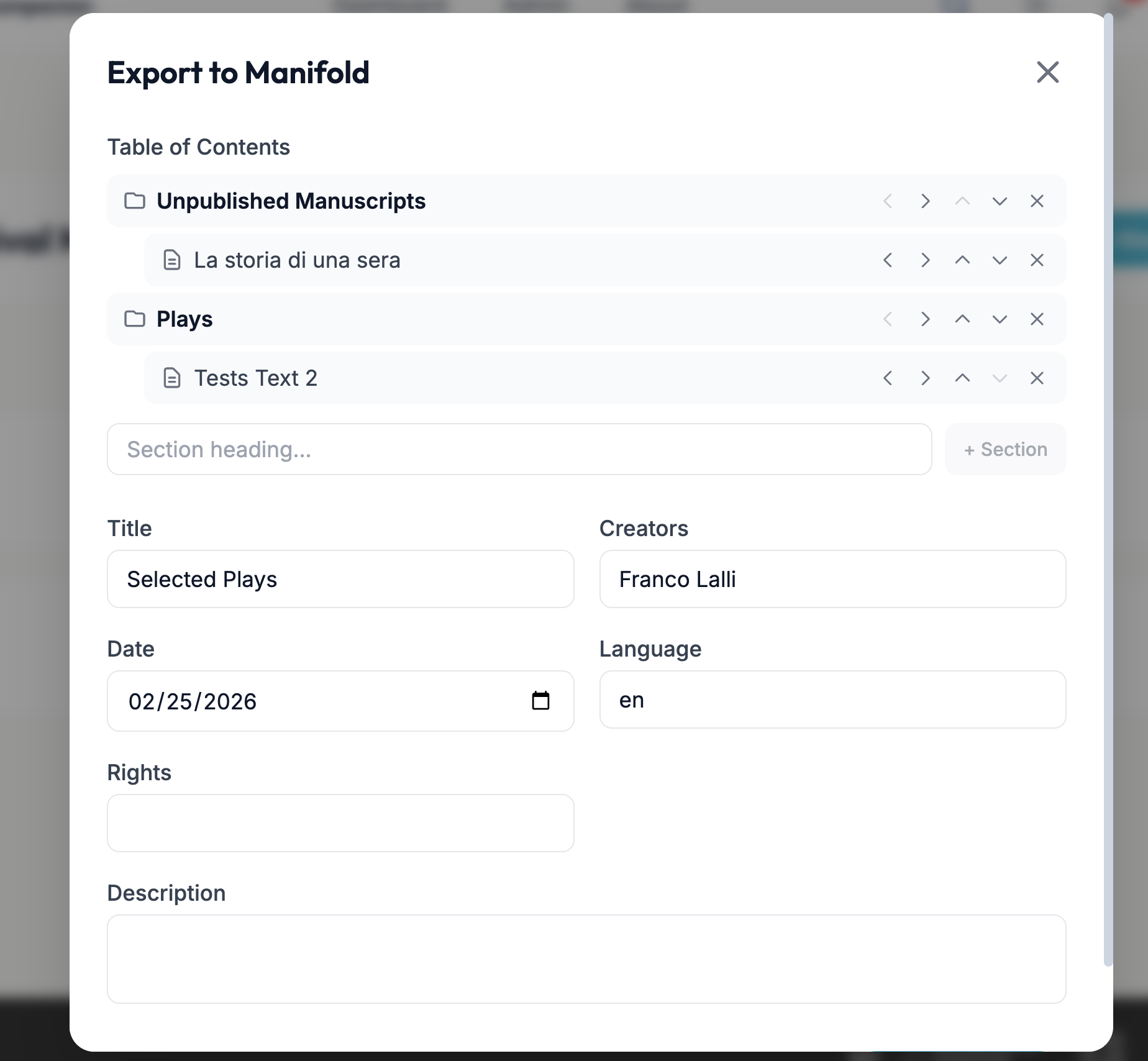
Export to Manifold
Arrange contents and Dublin Core metadata, then publish.
Custom-built (or “vibe-coded”) applications
Standalone open educational tools built mostly by describing them to AI (sometimes by people who don’t typically write code).
A reading tool developed by Zach Muhlbauer that turns passages from Project Gutenberg into fill-in-the-blank exercises.
CAIL Fellow Nicole Walker built this tool to give her composition students visual feedback on their writing.
If you released an OER, how would you want AI to be allowed to use it, or not?
What would a selective, purpose-driven use of AI look like in your own OER work?
What would informed refusal look like in the context of your syllabus/project?
Which of today’s problematics still feels unresolved to you?
References
- Kalai et al. (OpenAI & Georgia Tech), “Why Language Models Hallucinate,” 2025.
- Stanford HAI, “The 2025 AI Index Report,” 2025.
- Open Source Initiative, “The Open Source AI Definition 1.0,” 2024; “Meta’s Llama license is still not open source,” 2024.
- Groeneveld et al. (AllenAI), “OLMo: Accelerating the Science of Language Models,” 2024.
- David Wiley, “Defining the ‘Open’ in Open Content and OER” (the 5 R’s).
- UNESCO, “Open education principles: Resisting the metrics of AI black boxes,” 2024.
- Society & AI, “Beyond the Open-Weights: Open Education and the Compute Divide,” 2025.
- The Bookseller, “Academic publishers and AI – one year on,” 2025; Authors Guild, “AI Licensing: What Authors Should Know.”
- AdExchanger, “The AI Search Reckoning Is Dismantling Open Web Traffic,” 2025.
- Open Future, “Public AI,” and Internet Policy Review, “AI as commons,” 2025.
- Langdon Winner, The Whale and the Reactor (1986); “Do Artifacts Have Politics?” (1980); Autonomous Technology (1977).
- Bartz v. Anthropic (N.D. Cal., 2025): training ruled fair use, pirated sourcing not; $1.5 billion settlement, 2025.
- Creative Commons, “Understanding CC Licenses and AI Training: A Legal Primer,” 2025.
- Creative Commons, “Introducing CC Signals,” 2025; “From Signals to Infrastructure,” 2026.
- Open Future, “The Paradox of Open,” 2023.
- Stefaan G. Verhulst, “The Weaponisation of Openness,” 2025.
- Wikimedia Foundation, “How crawlers impact the operations of the Wikimedia projects,” 2025; Enterprise API, 2025.