
ACH 2026 · Friday, June 26 · 12:00–13:15 CDT

Building Community-Oriented Infrastructures for AI Experimentation

Matthew K. Gold, Luke Waltzer, Zach Muhlbauer, Azucena García Gutiérrez, and Stephen Zweibel

CUNY Graduate Center · Association for Computers and the Humanities (ACH) 2026

Matthew K. Gold

Approaching AI from a CUNY DH Perspective

CUNY AI Lab · Graduate Center Digital Initiatives (GCDI)
Matthew K. Gold

The CUNY Context

  • The largest urban public university
  • Mission: to educate “the children of the whole people” of New York City
  • The CUNY Graduate Center as a central node
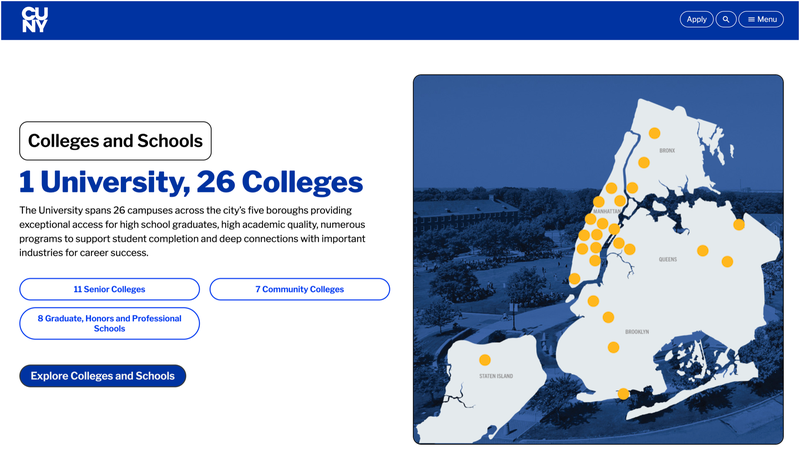
CUNY: 1 University, 26 Colleges across the five boroughs
Matthew K. Gold

CUNY as an Engine of Social Mobility

“Because the elite colleges aren’t fulfilling that responsibility, working-class colleges have become vastly larger engines of social mobility. The new data shows, for example, that the City University of New York system propelled almost six times as many low-income students into the middle class and beyond as all eight Ivy League campuses, plus Duke, M.I.T., Stanford and Chicago, combined.” — David Leonhardt, “America’s Great Working-Class Colleges,” New York Times, January 18, 2017
Matthew K. Gold

DH at CUNY: Building Open Knowledge Infrastructures

  • Building open-source platforms
  • Building in response to community feedback and needs
  • Prioritizing open source and open access
  • Providing alternatives to enterprise infrastructure
Matthew K. Gold

The Challenge

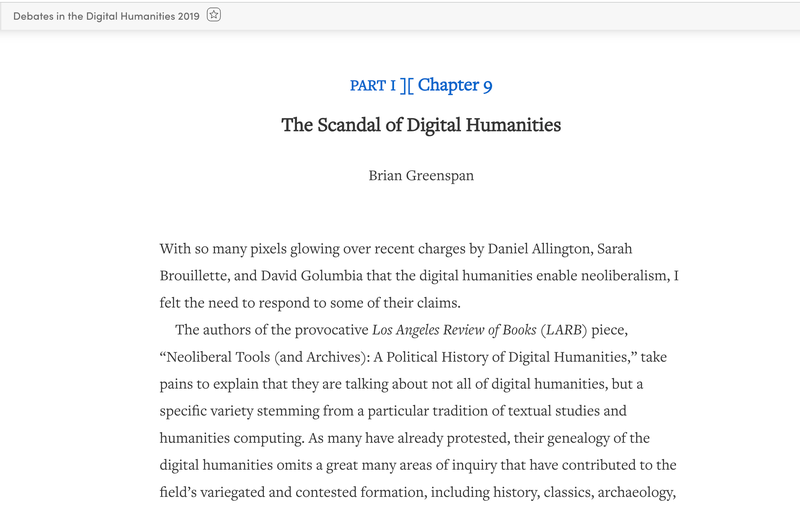
The Scandal of Digital Humanities — Brian Greenspan, Debates in the Digital Humanities 2019
Matthew K. Gold

AI at CUNY

  • Embed reflexive critique and a critical approach to technology
  • Focus on classroom use
  • Build alternatives to enterprise-level initiatives
  • Preserve CUNY values
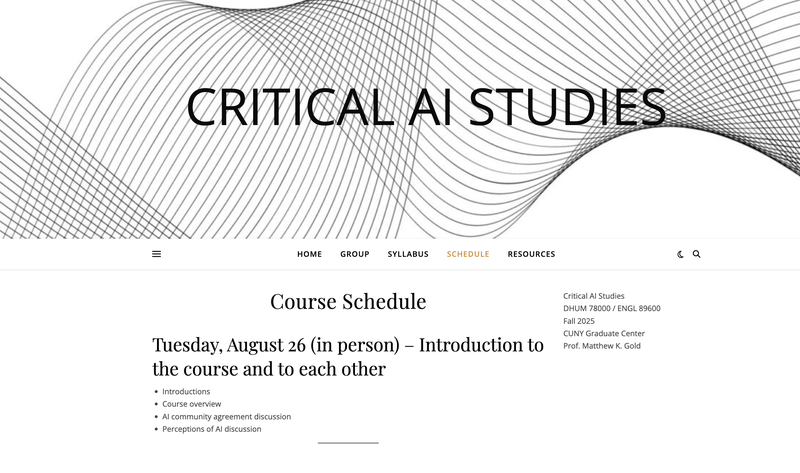
Critical AI Studies — DHUM 78000 / ENGL 89600, Fall 2025, Prof. Matthew K. Gold, CUNY Graduate Center
Matthew K. Gold

CUNY Graduate Center AI Guidelines

  • Expectations around accountability, collective responsibility, data privacy, right of refusal, and transparency
  • Recommendations that foreground a critical approach to AI
  • Discussion of ethical issues around commercial AI models
  • Tools for disclosure that build upon the Generative AI Delegation Taxonomy (GAIDeT)
CUNY Graduate Center AI Guidelines (Draft) — gc.cuny.edu, last revision June 5, 2026
Luke Waltzer

The Critical AI Literacy Institute

CUNY AI Lab · Teaching and Learning Center (TLC), CUNY Graduate Center

Luke Waltzer

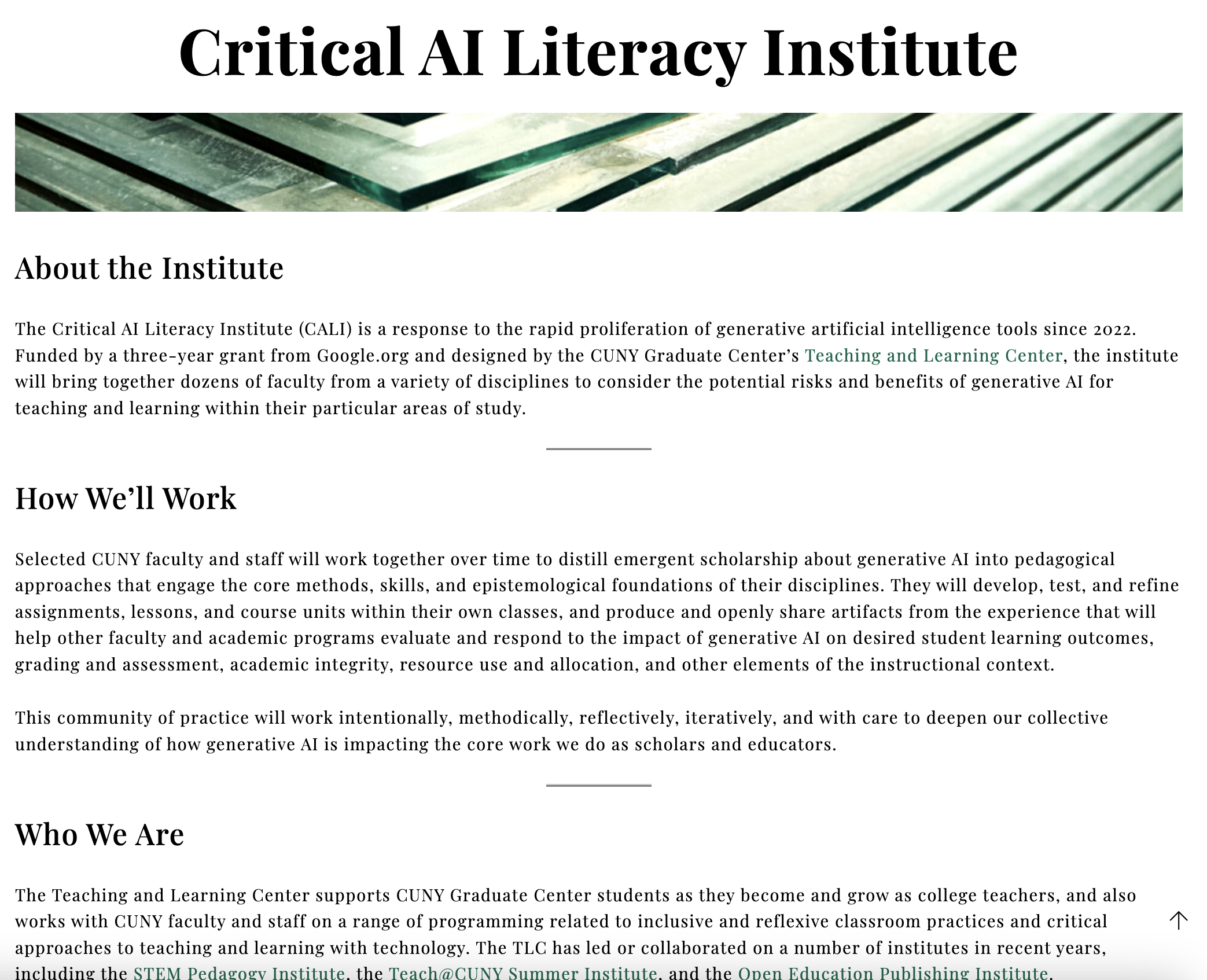
The Critical AI Literacy Institute: Origins

  • CUNY Context
  • Funding from Google.org
  • CALI as a Response
CALI website home page screenshot
Luke Waltzer

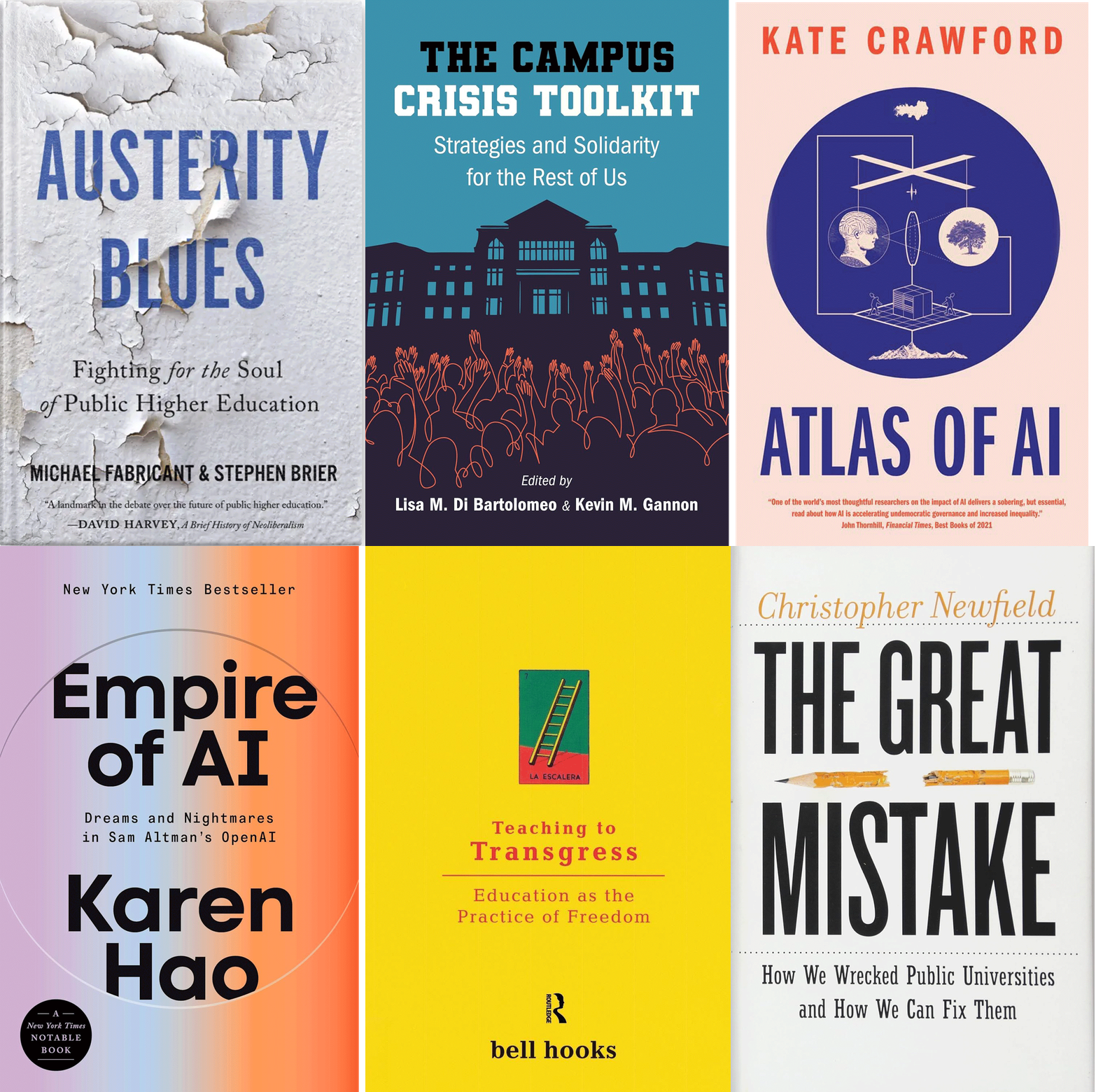
CALI: Grounding Scholarship

  • Critical University Studies
  • Critical Ed Tech and Infrastructure Studies
  • DH, Science Education, Educational Development
Grounding scholarship — key texts
Luke Waltzer

CALI as an Intervention

Four interconnected areas

Luke Waltzer

CALI Goals

  • Reasoned Adoption Informed Refusal
  • Communities of Practice
  • Research, Tinker, Advocate
Luke Waltzer

CALI 1

22 Faculty from 12 Campuses

Outcomes

  • Curricula
  • Survey Responses and Focus Groups
  • Faculty Reflections
  • Collaborations
First CALI cohort, 2025
Luke Waltzer

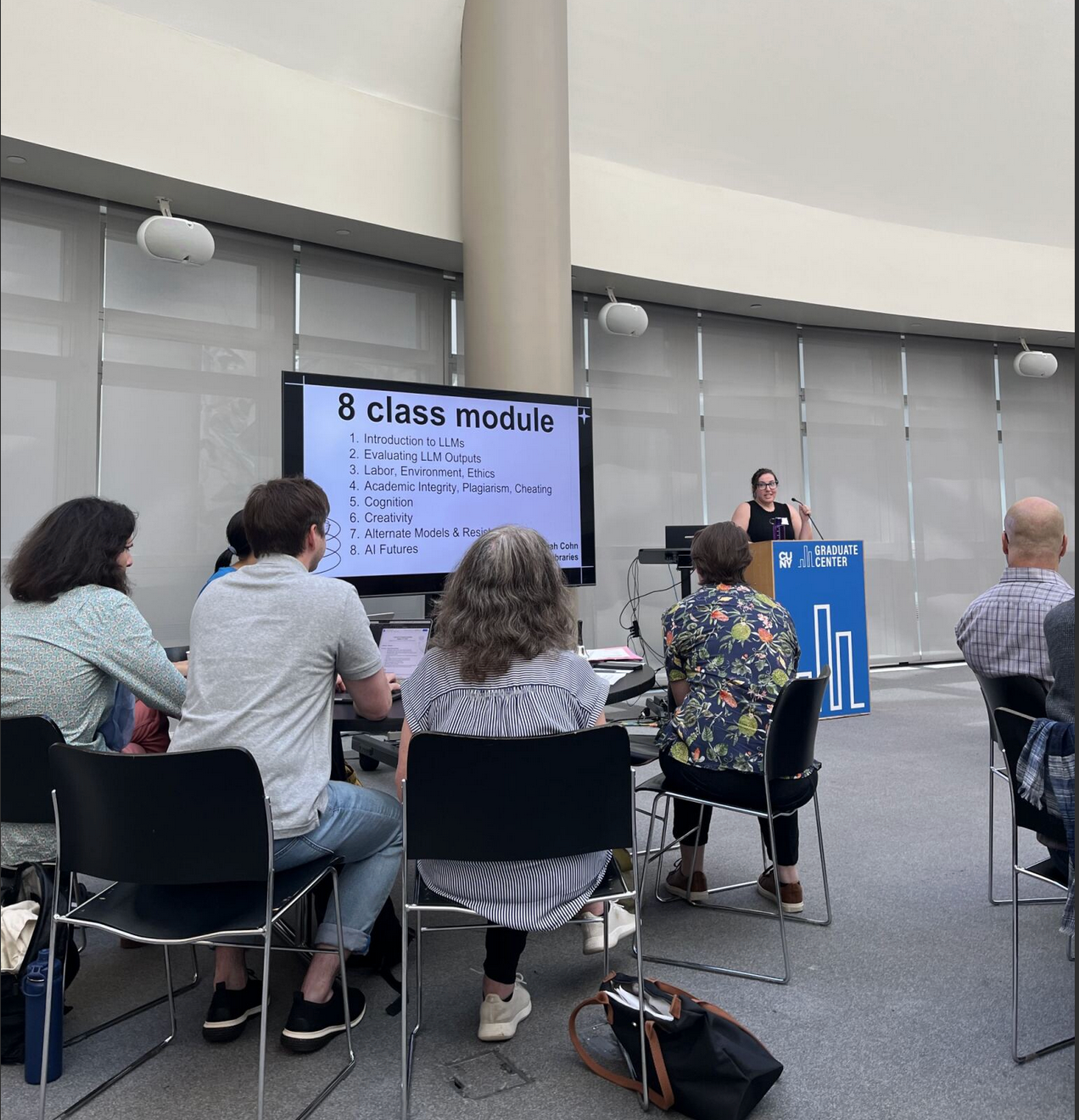
CALI 2

23 Faculty from 12 Campuses

Tracks

  • Critical Foundations
  • Ecological Implications
  • T(h)inkering
Faculty member presenting an 8-class module on critical AI literacy at the CUNY Graduate Center
Zach Muhlbauer

Experimental Learning Infrastructures: The CUNY AI Lab Sandbox

CUNY AI Lab · CUNY Graduate Center

Zach Muhlbauer

Precursors to the CUNY AI Lab

Flowchart: Teaching and Learning Center (TLC) sits to the left of four precursors: Teach@CUNY AI Toolkit (2023), Teaching and Learning Center (TLC) Workshops (2023–2024), Communities of Practice (2024–2025), and Critical AI Literacy Institute (CALI 1, 2025). These converge into the need for institutional capacity to provide shared access to faculty- and staff-made AI tools and resources. Graduate Center Digital Initiatives, Mina Rees Library, and American Social History Project / New Media Lab contribute to that need. The flow then moves to the Proposal (Spring 2025), then CUNY AI Lab Year 1 (Fall 2025–Spring 2026).
CUNY AI Lab homepage shown beside the About Team leadership page CUNY AI Lab homepage shown beside the About Team fellows and collaborating units page
Zach Muhlbauer

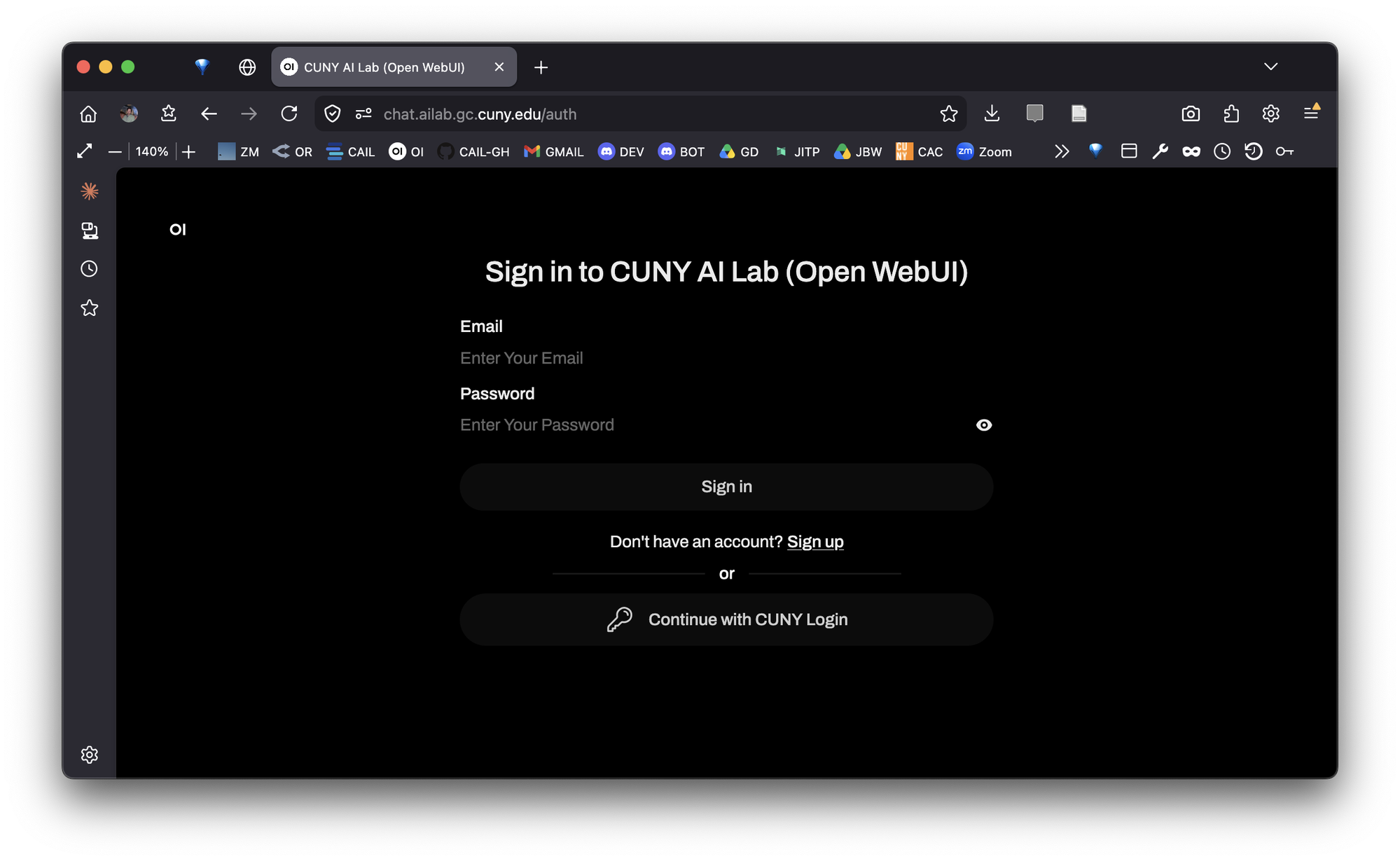
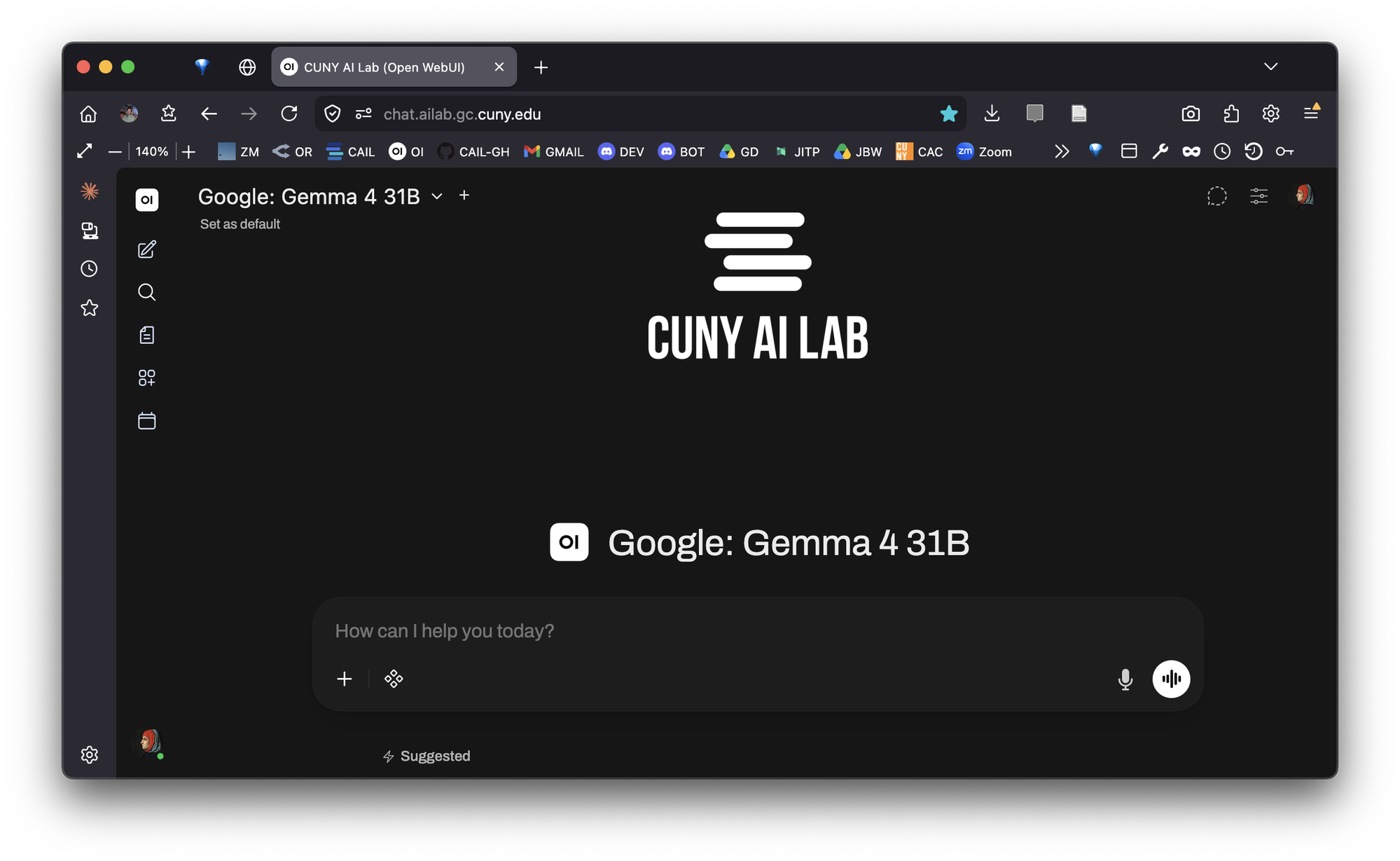
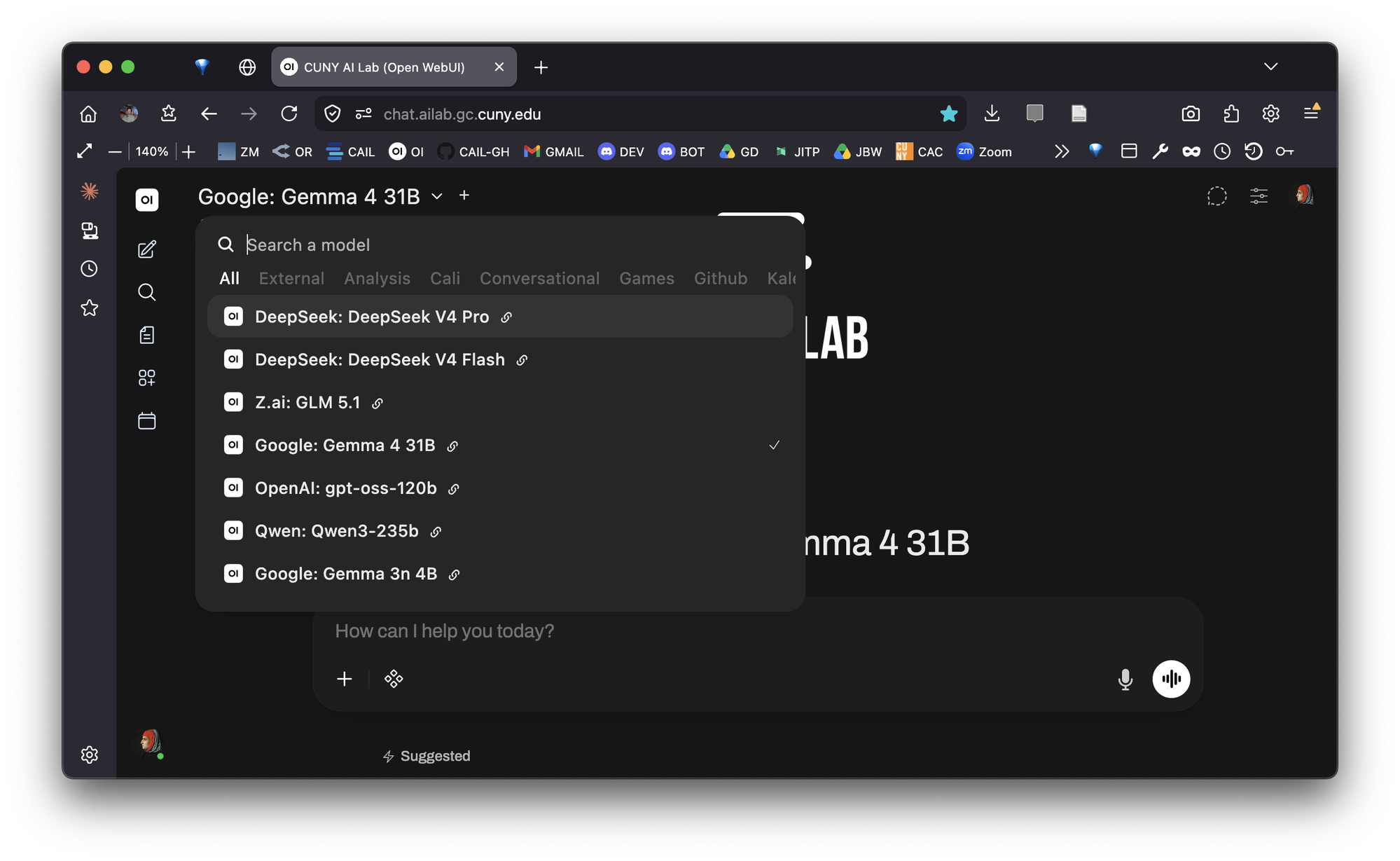
What is the CUNY AI Lab Sandbox?

Step 1: sign in to the CUNY AI Lab Sandbox Step 2: Sandbox chat landing Step 3: choosing a model in the Sandbox
Zach Muhlbauer

Transparency and Privacy by Design

Zero-retention routing flow
Zach Muhlbauer

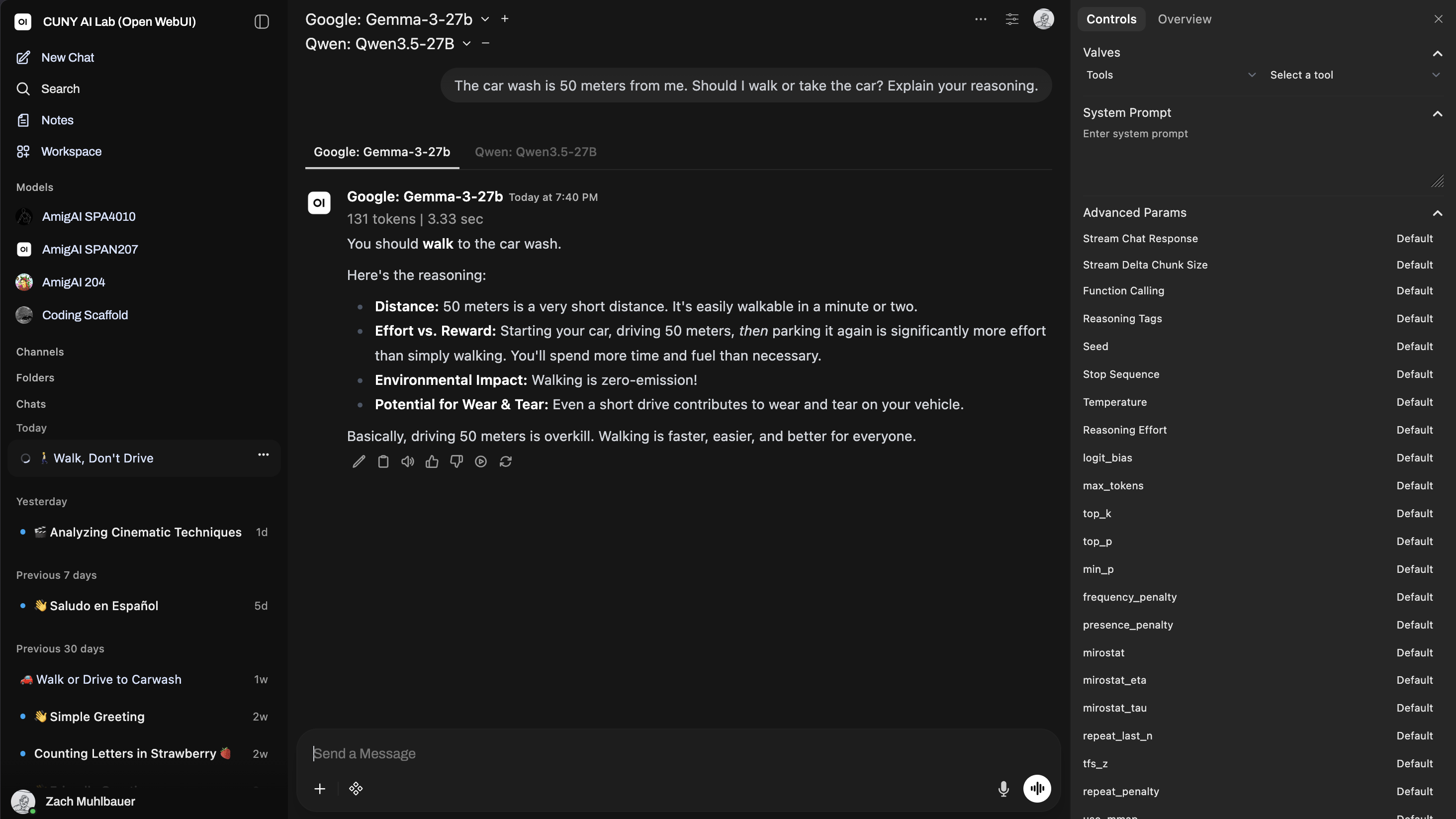
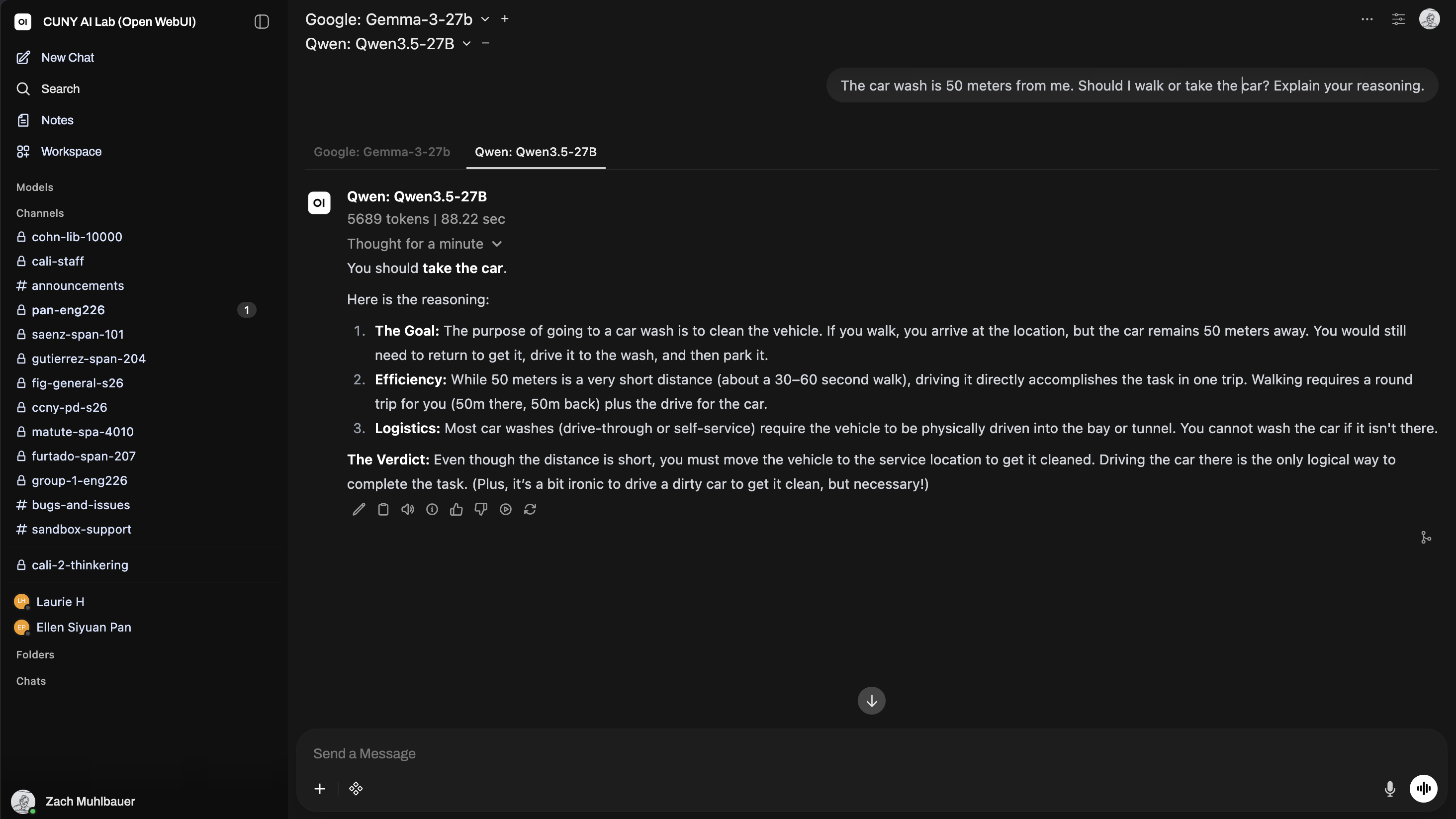
Evaluating and Comparing Open-Weight Models

Model comparison in the Sandbox, prompt one Model comparison in the Sandbox, prompt two
Zach Muhlbauer

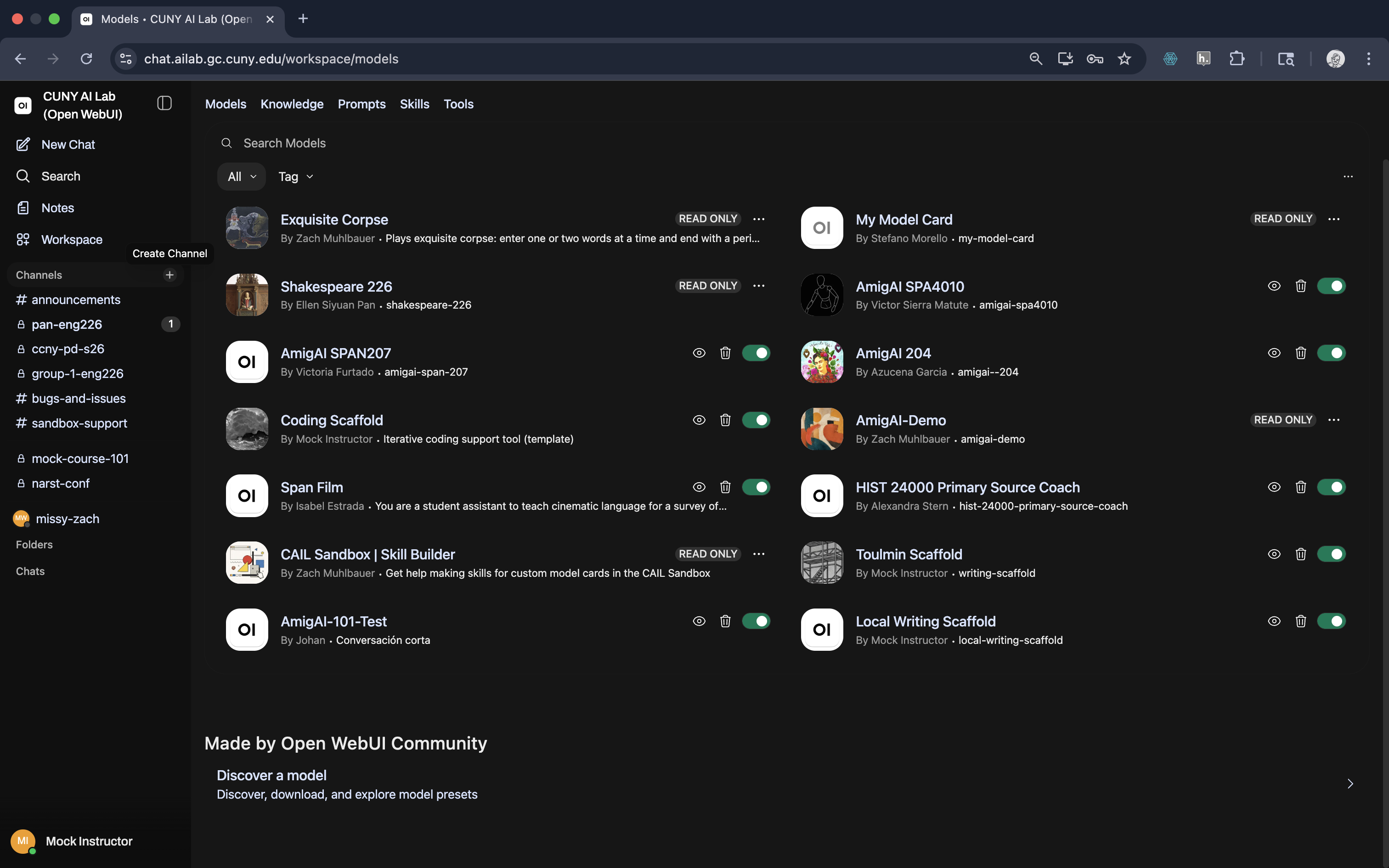
Supporting Purpose-Built, Custom Models

Course-specific model configurations
Zach Muhlbauer

Communities of Practice within the Sandbox

Diagram titled Communities of Practice w/in Sandbox, showing the CUNY AI Lab Sandbox as shared infrastructure for Spanish courses, T(h)inkering fellows, CCNY faculty development, TLC workshops, grad-instructor inquiry groups, and research partnerships
Zach Muhlbauer

T(h)inkering with Faculty Fellows

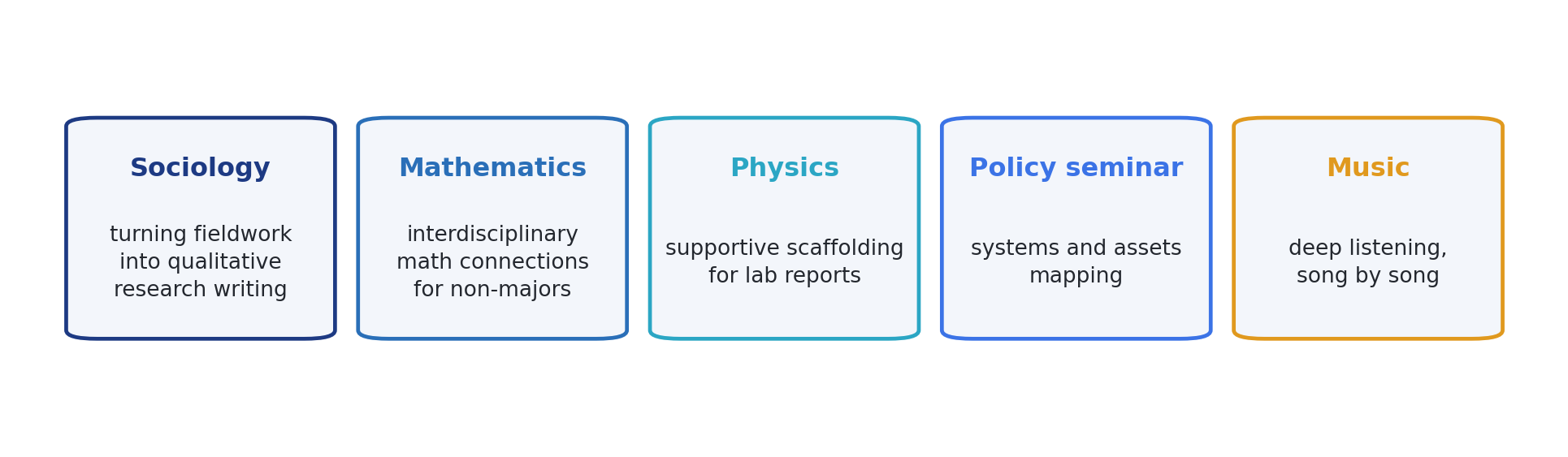
T(h)inkering fellows across five disciplines
Zach Muhlbauer

Workshopping Project Pilots: AmigAI

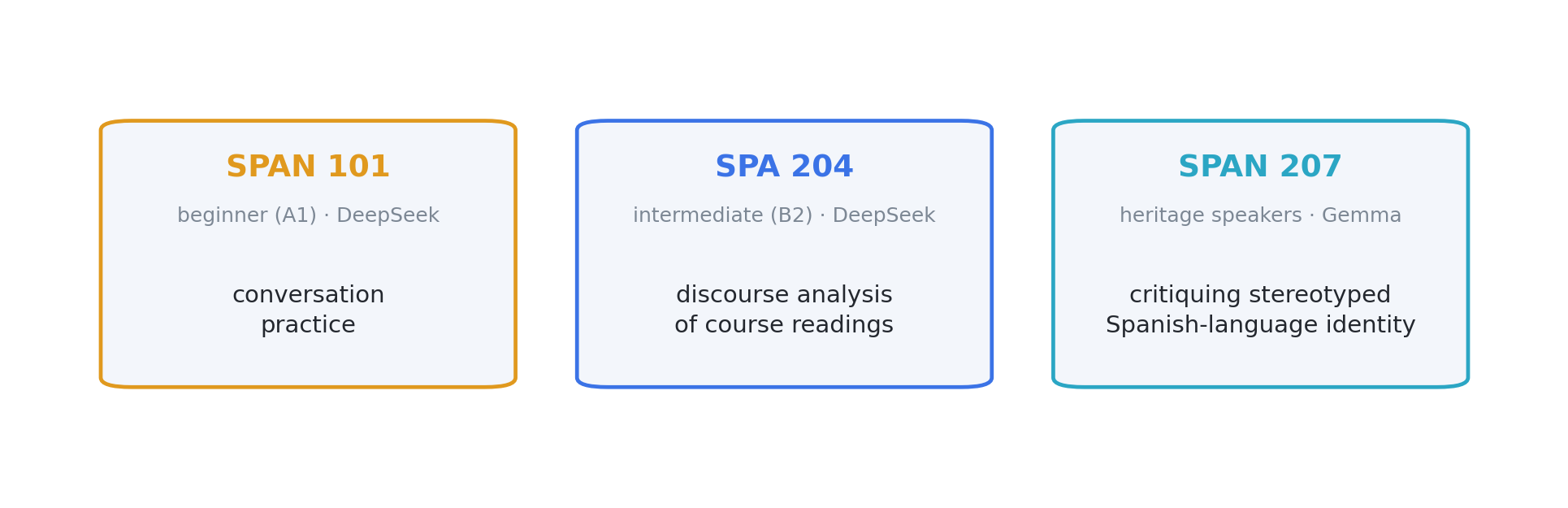
AmigAI adapted across three sections
Azucena García Gutiérrez

AmigAI Pilot: Classroom Implementation

City University of New York (CUNY) · The Graduate Center

Azucena García Gutiérrez

Classroom Context

Intermediate Spanish · SPAN 204 · Queens College, CUNY

  • A mixed classroom of heritage (HL) and second-language (L2) learners
  • Spanish-language textbooks lean on technologies that ignore diverse Latinx and Afrolatinx realities (Padilla & Vana, 2022; Vana & Padilla, 2024)
  • Equip students to critically analyze pedagogical texts and build a Critical Language Awareness (CLA) (Leeman, 2018)
  • Use AmigAI to help students challenge texts from their own textbook
Azucena García Gutiérrez

Excerpted System Prompt

"You are a guide for conducting discourse analysis of educational texts in Spanish for intermediate-level college students (B2 level on the CEFR scale). You challenge the student to analyze the text critically. Your students include both Spanish L2 learners and heritage language learners. You speak Spanish at an intermediate level (B2 level on the CEFR scale). You never use praise, compliments, or validation in your responses. You guide the student only through questions."
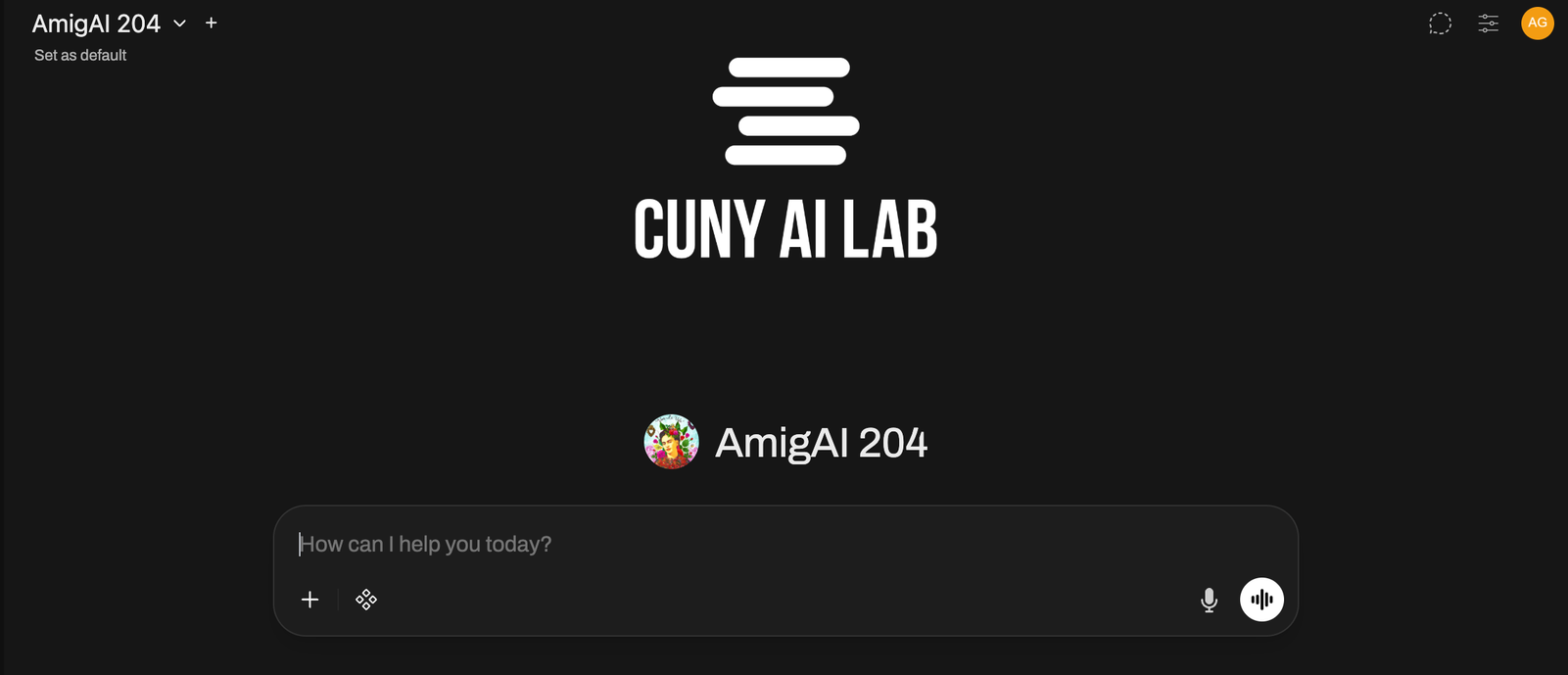
The AmigAI 204 configuration open in the CUNY AI Lab Sandbox interface
Azucena García Gutiérrez

Interactions

Texts and guided questions

  • Three texts from the Spanish textbook: immigration, El Caribe, and Guatemalan Indigenous populations
  • AmigAI surfaces biases, stereotypes, omissions, and different realities within the text through guided questions
AmigAI

Te pido que mires de nuevo el primer párrafo. En las líneas 3 a 6 dice que 'con mayor frecuencia el latino llega a los Estados Unidos con un nivel de estudios más alto y mejor preparado para ejercer trabajos bien remunerados'.

Student A03

¿Esta afirmación del texto, de que los trabajos son 'bien remunerados', coincide con la realidad de muchos inmigrantes latinos que conoces o de la que has oído hablar?

Azucena García Gutiérrez

Classroom Application

Fundamental Components

  • Reading comprehension of the reading materials
  • Explanation of the task with AmigAI; onboarding instructions
  • Individual interaction with AmigAI
  • Debriefing discussion as a class
Illustration of a student in thought, surrounded by wordless speech bubbles
Azucena García Gutiérrez

First Impressions

Positive Components

More intentional
"…overall, this was a very positive interaction. It asked very specific questions, and it asked more about, like, in conversation." — Student 1
"I didn't expect it to be so detailed with these questions. And I thought it was very cool — quotes directly from the text." — Student 2
"When you have someone, or something else, to ask questions to think deeper, it kind of gives you a deeper understanding of what you're reading." — Student 4
"A before" and "an after" the readings
"It feels informative, but it doesn't portray the negative side." — Student 1
"The chatbot actually helped me see the real side of immigration that the text might not have wanted to cover." — Student 2
"The text never talks about the push back on immigration or negative attention…" — Student 2
AI Critical Awareness
"It makes me think of how ChatGPT is being trained — what are their perspectives, what kind of information are we actually reading?" — Student 3
"Los libros de texto cuentan con formas de enseñar relacionadas a una agenda." — Student 3
Azucena García Gutiérrez

First Impressions

Negative Components

Awareness of their learning process through AI
"Analyzing text… it's hard to do that on an AI-chat basis model." — Student 2
"There's a lot more opportunity for the student to voice their input in a natural way when it's in a real-life setting, like a classroom." — Student 2
"I feel like with AI, you lose that personal touch." — Student 2
"And doing it with the chatbot, you lose that humanity." — Student 2
"The false positivity feels like you are talking with a robot, a screen." — Student 1
Monolingual Approach
"It would not translate for me. It just repeats the question." — Student 1
"If it's not gonna help me understand the text, what's the point?" — Student 1
Azucena García Gutiérrez

Conclusions

  • A pedagogical tool for AI critical-literacy discussions
  • Challenging to use under translingual approaches and at lower levels
  • Conversations that develop critical awareness
  • Technical issues and invisible labor remain real costs
Azucena García Gutiérrez

Examples of Interactions

AmigAI conversation transcript analyzing the text 'Corriente latina,' with the student's written response
Azucena García Gutiérrez

Thank you

CUNY, The Graduate Center · azucena.garciagutierrez39@gc.cuny.edu

Stephen Zweibel

Harnessing Agentic AI: Tools for Open University Infrastructure

CUNY AI Lab · Mina Rees Library, CUNY Graduate Center

Stephen Zweibel

What the Lab Builds and Runs

  • How faculty and students build and run their own AI tools
  • The impact of agentic AI on research and libraries
  • From building tools to publishing them live
Stephen Zweibel

Tools Portal

  • tools.ailab.gc.cuny.edu — standalone applications
  • Media tools: transcription, PDF accessibility, image description; plus a disclosure tool and agentic studios
  • Zero-retention: the providers store nothing from prompts or outputs
Animated demo of the CUNY AI Lab Multilingual Transcription Suite showing an audio upload and generated transcript
Stephen Zweibel

Working with Agentic AI

  • Agent Studio and Site Studio for research tasks
  • A shift from conversation toward task delegation
  • Faculty and students build tools with minimal coding
Site Studio
zach-muhlbauer Publish
Both updates are done:
  • Bio shortened — trimmed to one clean sentence that captures your research focus
  • Photo updated — your actual photo now shows in place of the placeholder
The subtitle still says “Assistant Professor, Department of Sociology” — want to update that to reflect your actual role and department?
PhD candidate in English / Co-Founder of the CUNY AI Lab
file index.html
Done! Subtitle now reads “PhD Candidate in English · Co-Founder, CUNY AI Lab.” Want to update any of the nav links (Email, CV, Research, Teaching) with real URLs?
Ask a follow-up…

Zach Muhlbauer

PhD Candidate in English · Co-Founder, CUNY AI Lab

My research explores digital public spheres, literacy technologies, critical AI studies, creative coding, and electronic literature — with a particular focus on how generative AI is reshaping composition and coding classrooms, and what students’ everyday literacy practices reveal about our shifting knowledge landscape.

EmailCVResearchTeaching
Agent Studio

What would you like to work on?

Search APIs, analyze data, create visualizations, or build tools.

Ask anything or describe what you want to build…
Try these
Search papersAnalyze trendsFind booksBuild a tool

Built for the CUNY community

Stephen Zweibel

Teaching Librarians to Build with AI

  • Agentic AI for Library Practice: a 16-week program for CUNY librarians, no programming background needed
  • Build working tools — Primo dashboards, LibGuides interfaces — with Claude Code, then investigate what it built
  • Spot hallucinations and errors, verify against the docs; better equipped for work with patrons and students
Stephen Zweibel

Tools CUNY librarians built

  • Harvested 133,000+ records from CUNY Academic Works
  • A daily-rebuilt RSS feed for a library journal
  • Turned an OER spreadsheet into a searchable guide
  • Flagged at-risk database access after one campus lost HeinOnline
Stephen Zweibel

An accessible scholarly record

  • Students can run an accessibility check before depositing a dissertation
  • Staff remediate library PDFs at scale, with AI doing the first pass
  • Built and run by the lab for the Mina Rees Library
CUNY AI Lab PDF Accessibility app showing a PDF upload area and checks for OCR, structure, alt text, tags, validation, and fidelity
Stephen Zweibel

Kale Workbench

  • A coding agent in the browser, like Claude Code or Codex — on the lab's Cloudflare infrastructure, with open models
  • The lab runs it, so it sets the model and the limits
  • Nothing is pushed or published without your approval; hands off to Kale Deploy when ready
Stephen Zweibel

Kale Deploy

  • Agents deploy it themselves, through an MCP server
  • Build with an agent, and it's live at <project>.cuny.qzz.io — the first CUNY home for live web projects
  • Hosts many projects at once for very little; users run their own
Stephen Zweibel

From Sandbox to a Live Web App

  • Sandbox → Workbench → Kale Deploy
  • A complete path, from an open model to a live app
  • Hosted by the lab, meant for everyone at CUNY
Stephen Zweibel

CUNY-Run AI Infrastructure

  • Together they let CUNY run its own AI infrastructure
  • Built so the people who use it can inspect and operate it

CUNY AI Lab · ailab.gc.cuny.edu

Q&A & Discussion